

By Lucy Pirie-Guy
Shared from Within Reach Magazine Winter 2025. Read it now!
Parents or Reach members, if you’re currently exploring career paths or future options, have you read the article from our winter wr magazine by Reach member and Optometrist Lucy Pirie-Guy?
Yet another great example of someone in the ULD community trailblazing when it comes to careers and employment options. Just because you’ve not seen anyone with a ULD do it, doesn’t mean you can’t. Here’s Lucy’s take on entering the world of Optometry…
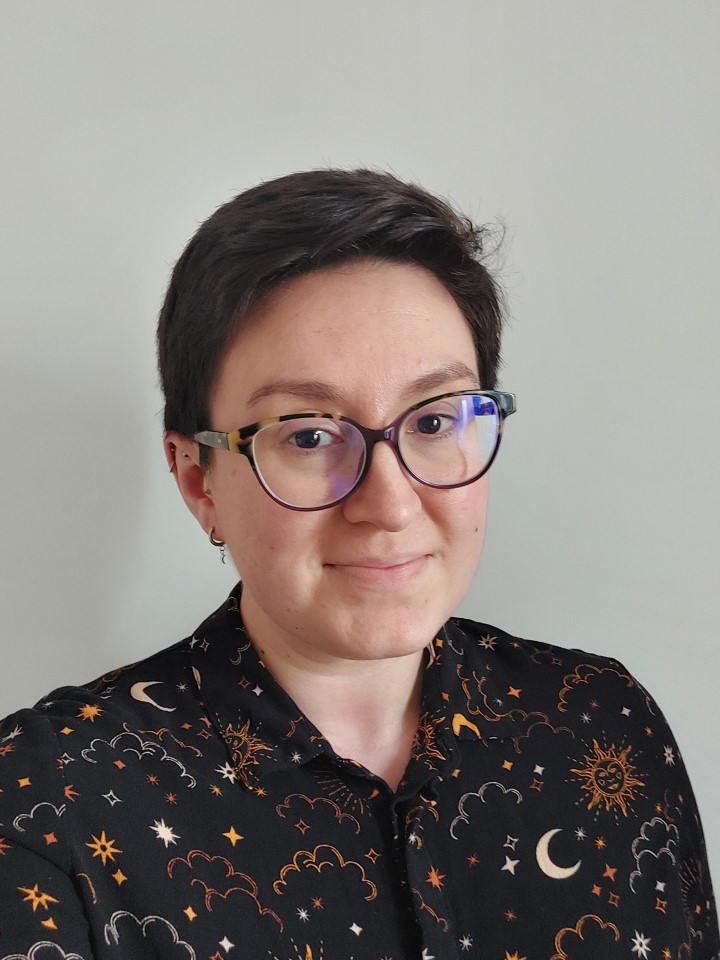
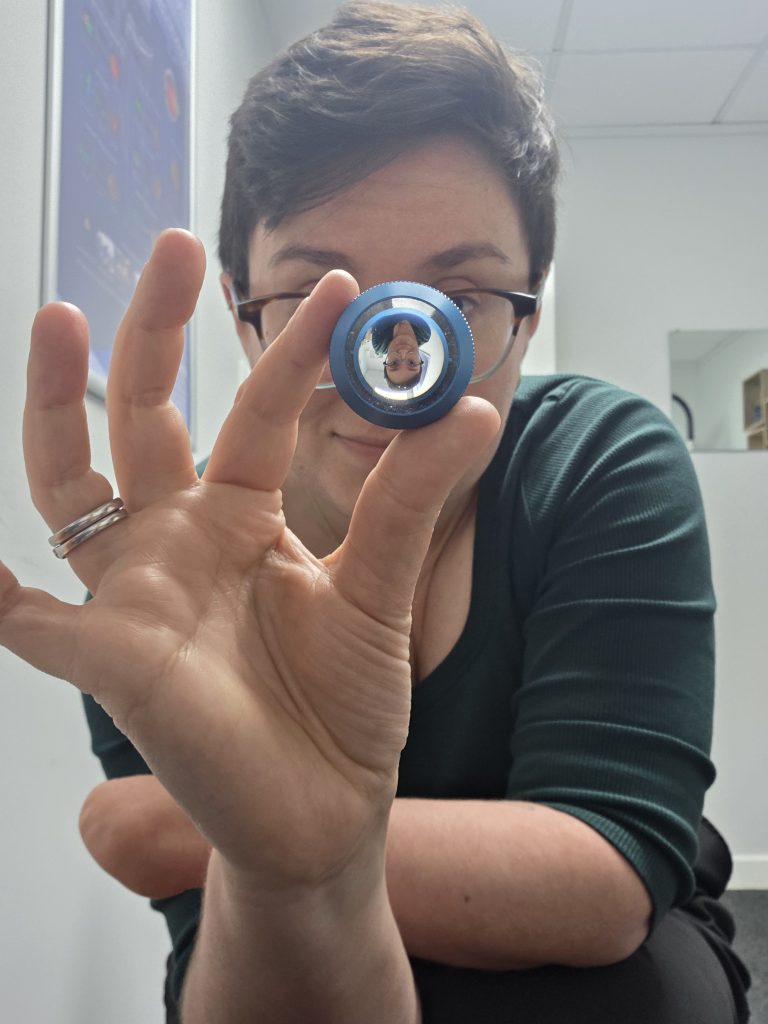
My name is Lucy; I am 30 and I live in Devon with my husband James and our doggies Apollo and Nyx. I am an optometrist (you may call me an optician) so I spend my days examining eyes, prescribing glasses and fitting contact lenses. I was also born with right symbrachydactyly which, for me, means I have a wrist joint but no hand or fingers on my right side.
I recently wrote a short article for an optometry blog about my experience of the profession with an upper limb difference. The kind editors of Within Reach have asked me to tell you a little bit more about my life so far and my journey into eye-care.
Would you mind sharing a bit about your early life; what was it like growing up with an upper limb difference for you?
I was born in 1995 to my parents Lynn and Paul. There had been no indication of my limb difference before I was born so it was a surprise for them when I turned up without one hand. Thankfully, they took it in their stride and were happy I was a healthy wriggly baby – my mum was more concerned about getting some tea and toast after giving birth than how many fingers I did or didn’t have!
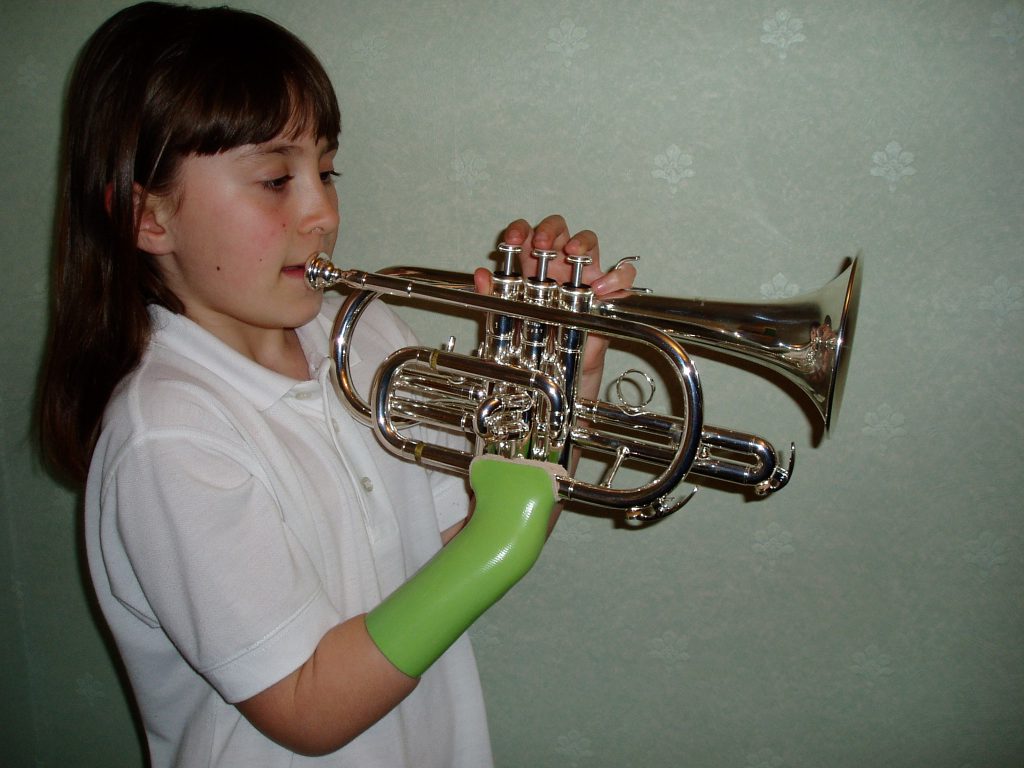
I think that thanks to my parents’ positive attitude about my upper limb difference (ULD), I had an incredibly normal early life: I was always keen for school, started ballet and tap and musical theatre, and played the cornet and violin in primary school.
As a teenager, I became much more self-conscious of my difference – though, that said, as a teenage girl I was self-conscious about everything! However, I kept up dancing and was a high academic achiever, so I had plenty of other things to focus on.
What inspired you to pursue optometry specifically?
I never have a great answer to this question I’m afraid! I did my A-Levels in Maths, Biology, Psychology and Law. I knew I wanted to go to university, and I was reasonably certain I wanted to go into healthcare. But I also knew I had no interest in being a doctor and definitely no interest in being a dentist (shudder). I had also at this point in my life been wearing glasses for several years and was therefore pretty familiar with going to the opticians. After a lot of thinking and worrying I managed to arrange a week’s work experience in a local practice and, long story short, here I am over 10 years later testing eyes myself!
Did you ever feel discouraged from entering a medical profession due to your limb difference? How did you navigate that?
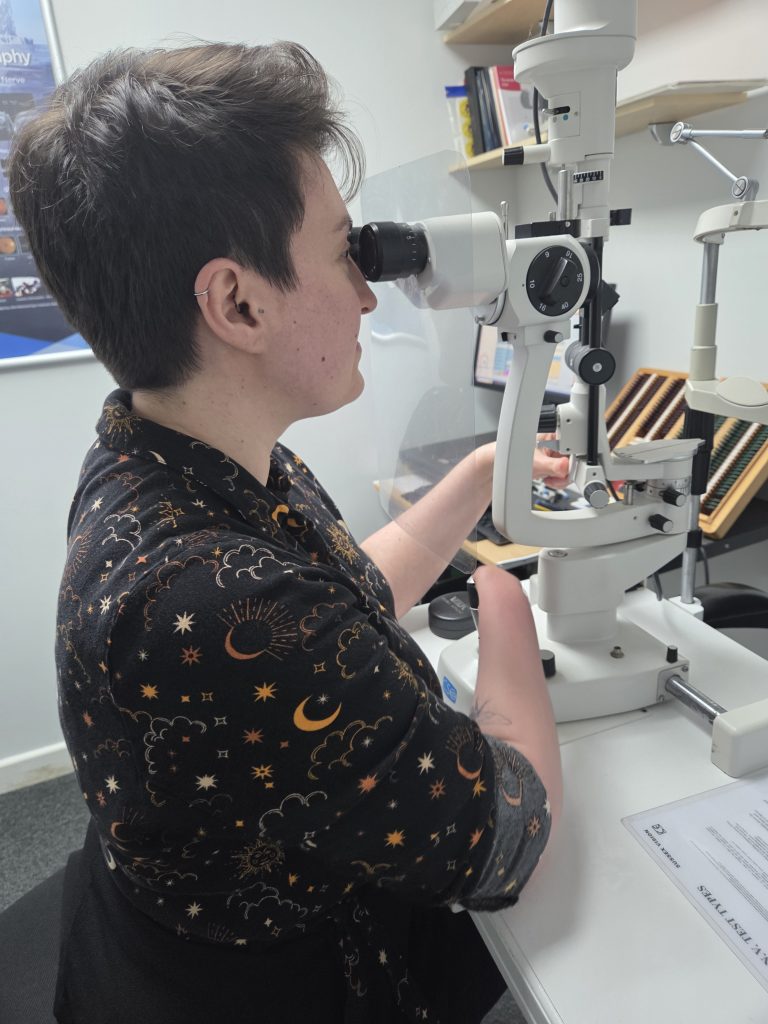
I can’t say I felt discouraged, but I was definitely nervous when applying. The universities were also a little nervous of me: half of the universities I applied to contacted me to ask about my disability and how I would manage. One university even asked me to come up and had me play with the equipment and put a contact lens in a poor unsuspecting staff members’ eye.
What was process like for you? Did you have to adapt certain techniques or tools?
At university there was a certain amount of adaption; the university have to, of course, teach the “perfect” techniques and particular ways of doing things. For example, there is one technique where you hold a piece of equipment in one hand and a small lens in the other in front of a patient. There is simply no way to do this technique one handed so I made use of an old adaptive device that was originally designed to hold cutlery – I cannot describe it so I will try to include a picture!
I also had to advocate for myself a certain amount; it is a tradition in optometry that if you are examining the patient’s right eye, your hold your equipment in your right hand. On more than one occasion, someone tried to correct me for holding things in the “wrong” hand. By my third year I would simply respond with my best eye roll.
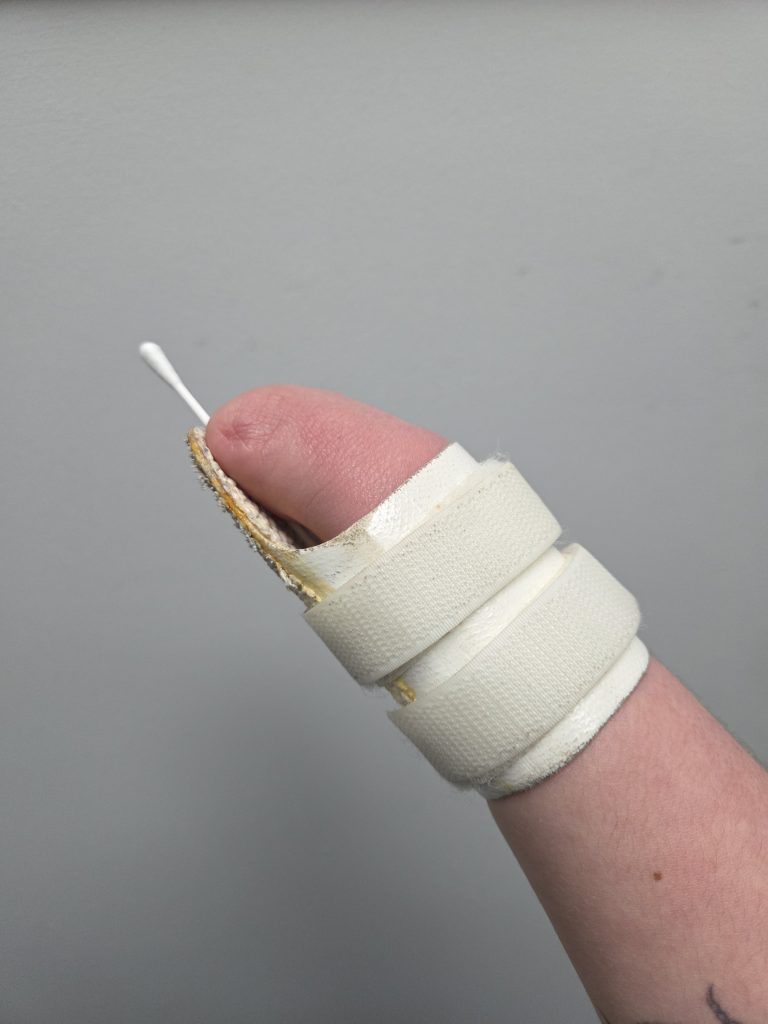
Now that I am ten years into my career, the way I do things doesn’t even cross my mind. The only real adaptive device I use is the occasional rubber band to hold a cotton bud.
What aspects of your work do you enjoy the most?
Really for me it is the problem-solving aspect. Problem solving is really the core of optometry; a patient comes in with an issue with their eyes or vision; we do a series of tests and investigations and then come up with an action plan. Being able to improve someone’s day to day life by solving a problem is very satisfying.
You wrote a blog for theeyecareadvocate.co.uk and you mentioned patients asking you quite often about your upper limb difference, how do you go about explaining it to them?
I usually just keep it simple with “born this way”. I joked in that blog that I was previously temped to get those words tattooed on my arm to save me saying it so often. I find most people are satisfied with that answer, but I do then occasionally get someone follow up asking if I was affected my thalidomide (the anti-sickness drug popular in the 50s and 60s which led to limb differences in some babies) to which I respond “how old do you think I am??”. More seriously though, I do find that most people are very respectful. I can’t lie, it can get a little tiresome when I’m asked about my hand several times in one day, but I try to keep my answers short and sweet so that I can move on and do what I need to do.
What advice would you give to educators or employers about supporting healthcare professionals with limb differences?
The biggest expert on someone’s capabilities is themselves. Offer help genuinely and kindly as you would to anyone else but don’t be surprised if help is not needed.
At WR we love to meet people in all sorts of careers so Reach children know the endless possibilities before them. For you, how important is visibility of limb-different professionals in healthcare?
One of the reasons I wrote my original blog post was because I was searching to see if there were any existing accounts from other disabled optometrists (which there weren’t).
I think it is very important for young people, especially those who are more self-conscious or struggling with their experience of disability, to see others with similar differences living very normal lives. I know we are all very thankful that there are now influencers and media personalities with ULDs who have had a huge positive impact, but I also know that not everyone wants their ULD to be the main focus of their life.
I would hope that all the great profiles and interviews you have at WR show young people that there are infinite paths in life open to you.
What would you tell a young person with a limb difference considering a career in optometry?
In my experience, living with a physical difference makes you a master problem solver, and as I said earlier, that is really the core of optometry. So, you’re already half-way there!
How do you hope your story impacts patients, peers, and future students?
I hope it gives a little insight into a career path that many people don’t think of – regardless of ULD or not.
Read it now in Within Reach Magazine Winter 2025!
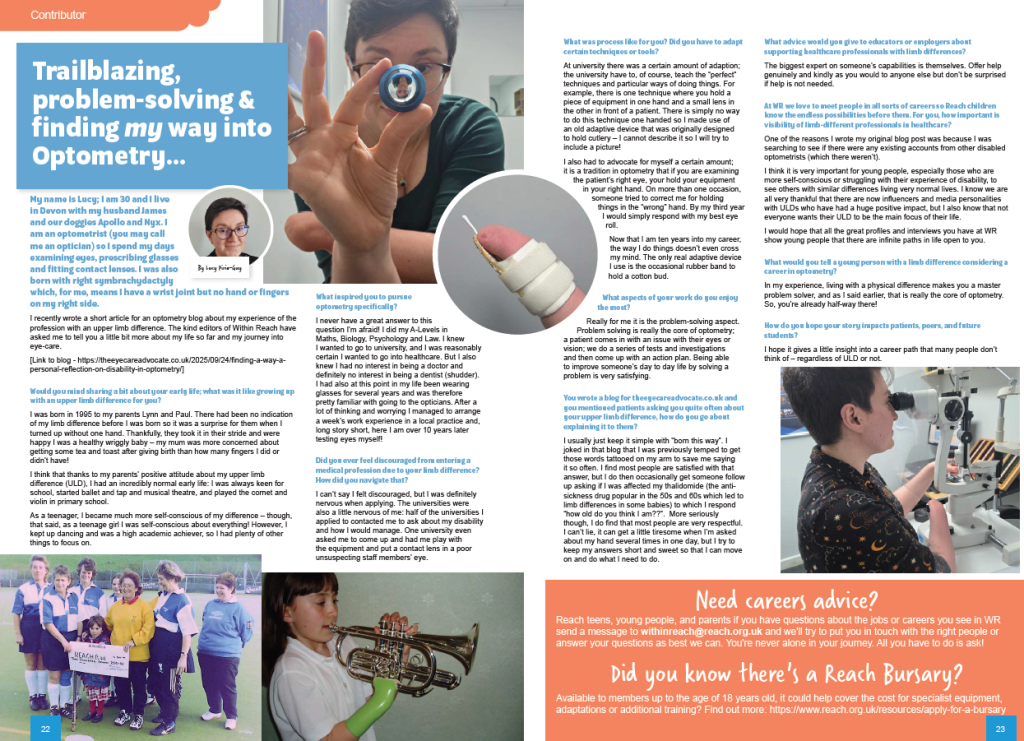
Need careers advice?
Reach teens, young people, and parents if you have questions about the jobs or careers you see in WR send a message to withinreach@reach.org.uk and we’ll try to put you in touch with the right people or answer your questions as best we can. You’re never alone on your journey. All you have to do is ask!
Did you know there’s a Reach Bursary?
Available to members up to the age of 18 years old, it could help cover the cost for specialist equipment, adaptations or additional training? Find out more about the Reach Bursary here.